

When it comes to traffic signs, the choice between aluminum and steel depends on factors like durability, corrosion resistance, and maintenance. Here's the bottom line:
- Aluminum lasts longer in harsh environments like coastal or humid areas due to its natural corrosion resistance. Marine-grade aluminum can last 15+ years with minimal upkeep.
- Steel is stronger and better for high-impact areas, but untreated steel rusts quickly, especially in salty or wet conditions. Even stainless steel needs regular maintenance to prevent rust.
- Aluminum is lighter, easier to install, and requires less maintenance, making it more cost-effective in the long run.
- Steel is heavier, more rigid, and better suited for temporary or heavy-duty applications but demands more frequent upkeep.
Quick Comparison
| Material | Lifespan | Maintenance Needs | Corrosion Resistance | Weight | Best Use Cases |
|---|---|---|---|---|---|
| Aluminum | 7–15 years (20+ in some cases) | Low – occasional cleaning | High (natural oxide layer) | Lightweight | Permanent signs in harsh conditions |
| Stainless Steel | 10–20 years | Moderate – annual polishing | Good (but requires upkeep) | Heavy | High-impact or high-traffic zones |
| Carbon Steel | Short (if untreated) | High – frequent rust-proofing | Low (prone to rust) | Heavy | Temporary signs in dry areas |
If you're looking for long-term performance with less maintenance, aluminum is the better choice for most traffic sign applications.
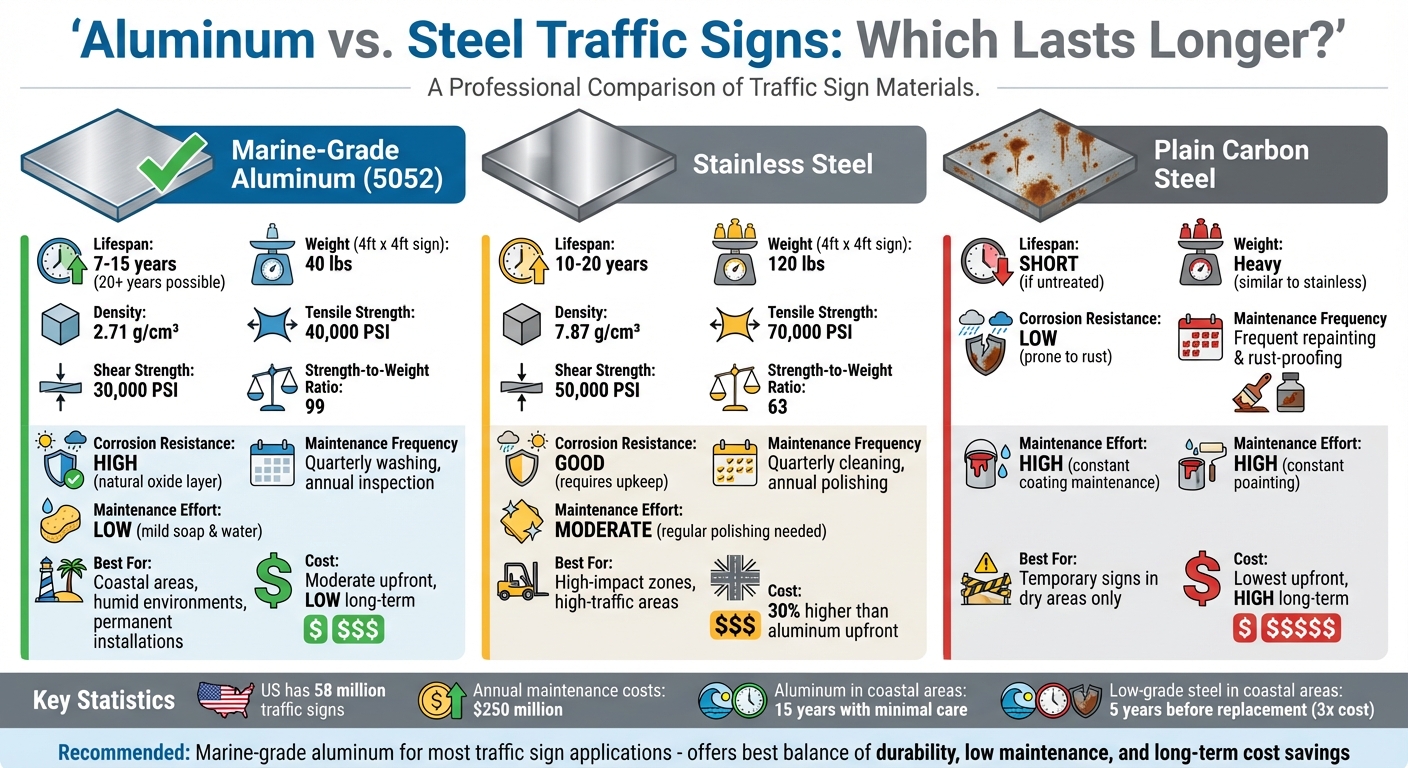
Aluminum vs Steel Traffic Signs Comparison: Lifespan, Maintenance, and Cost
Material Properties: Strength and Weight
Strength and Load-Bearing Capacity
When it comes to raw strength, steel outperforms aluminum by a significant margin. Steel boasts a tensile strength of 70,000 PSI, compared to aluminum's 40,000 PSI. Similarly, steel's shear strength reaches 50,000 PSI, while aluminum's is 30,000 PSI. These figures make steel the go-to choice for signs that need to endure heavy physical impacts, such as those in construction zones or areas frequently exposed to hail.
However, aluminum shines with its strength-to-weight ratio, which is approximately 99 compared to steel's 63. This means aluminum can provide substantial strength without the added bulk. For most traffic signs, aluminum delivers more than enough durability, especially when multiple layers are used in the design. Steel, on the other hand, is ideal for single-layer signs where maximum impact resistance is required.
"Our recommendation is always for aluminum since the weight is so much lower it makes handling much easier!" - ShieldCo
The differences in strength and weight between these materials also play a big role in how they are installed and supported.
Weight and Installation
Aluminum's lower density - 2.71 g/cm³ compared to steel's 7.87 g/cm³ - makes it a lighter, more manageable option for installations. For example, a 4ft by 4ft multi-layer aluminum sign weighs about 40 lbs, while the same sign made from stainless steel tips the scales at 120 lbs.
This weight difference has practical implications. A 40 lb aluminum sign can be mounted directly to drywall using standard wall anchors. In contrast, the 120 lb steel sign requires reinforced backing to stay securely in place. The lighter weight of aluminum also simplifies transportation, handling during installation, and reduces the need for heavy-duty mounting hardware. While steel's extra weight can offer more stability in high-wind conditions, it demands stronger support structures to manage the load.
Steel VS Aluminum in Signage | Sign Language - Episode 01
Corrosion Resistance and Weather Performance
When it comes to outdoor signs, durability in harsh weather is just as important as strength and weight. The ability to resist environmental wear and tear significantly influences a sign's longevity and performance.
How Aluminum Resists Corrosion
One of aluminum's standout qualities is its natural resistance to corrosion. When exposed to air, it forms a thin oxide layer that shields it from moisture and contaminants. The best part? If this layer gets scratched or damaged, it regenerates on its own - no need for extra coatings or treatments.
For coastal areas, marine-grade aluminum, especially the 5052 alloy, is the go-to choice. This specific alloy is designed to handle saltwater exposure, making it perfect for seaside installations. According to an ASTM study, aluminum excels in resisting damage from salt and moisture. Traffic signs made from marine-grade aluminum hold up well against common weather conditions. Adding a powder coating can further boost its durability by providing extra protection against the elements.
"For most environments, marine-grade aluminum is the best option - offering up to 15+ years of life, corrosion resistance, and minimal maintenance needs." – BlinkSigns
Steel's Rust Problems
Steel, on the other hand, faces significant challenges in outdoor environments - especially in coastal regions. Untreated or low-grade steel is prone to rusting when exposed to salt air and humidity. De-icing salts used in colder climates only speed up the deterioration process. Carbon steel, in particular, rusts quickly when it comes into contact with moisture.
To make steel weather-resistant, protective coatings like galvanization, zinc-rich primers, or epoxy finishes are essential. However, these coatings require regular inspections and reapplications to maintain effectiveness. For example, a marine-grade aluminum sign in a coastal area can last around 15 years with minimal care. In contrast, a low-grade steel sign might rust and need replacing in just 5 years - potentially tripling the overall cost. Even stainless steel, which contains chromium to improve its resistance to corrosion, still requires occasional cleaning to prevent minor rust spots.
These issues with steel directly affect upkeep expenses and the overall lifespan of the material.
Lifespan and Maintenance Requirements
Understanding the lifespan and upkeep of traffic signs is key to evaluating their long-term value. This section lays the groundwork for a detailed cost comparison in the next part.
Expected Lifespan: Aluminum vs. Steel
Aluminum traffic signs typically last between 7 and 15 years, with some outdoor installations exceeding 20 years when properly cared for. Marine-grade aluminum alloys, like 5052, perform exceptionally well in harsh environments due to their natural oxide layer, which enhances corrosion resistance. This extended lifespan means fewer replacements over time.
Stainless steel signs, on the other hand, generally last 10 to 20 years. However, untreated plain carbon steel deteriorates much faster, often requiring replacement within a few years when exposed to moisture or road salts. Protective coatings can help, but even minor damage to the coating can accelerate rusting.
Maintenance Frequency and Costs
Powder-coated aluminum signs are low-maintenance. A quarterly wash with mild soap and water, paired with an annual inspection of the powder coating, is usually enough to keep them in good condition.
Stainless steel signs also require quarterly cleaning but need annual polishing to maintain their shine and prevent surface spots. In contrast, plain carbon steel demands frequent upkeep, including repainting and rust prevention treatments. Even minor scratches in its protective coating can lead to rapid corrosion when exposed to the elements.
Longevity and Maintenance Comparison Table
Here's a quick breakdown of how these materials compare:
| Material | Expected Lifespan | Maintenance Frequency | Maintenance Effort | Weather Performance |
|---|---|---|---|---|
| Aluminum (Powder-Coated) | 7–15 years (20+ years for some installations) | Quarterly washing, annual inspection | Low – mild soap, water cleaning, and occasional checks | High corrosion resistance, especially in marine-grade alloys |
| Stainless Steel | 10–20 years | Quarterly cleaning, annual polishing | Low – regular cleaning and polishing | Excellent resistance to pollution, grime, and vandalism |
| Plain Carbon Steel | Short lifespan if untreated | Frequent repainting, rust prevention | High – constant protective coating maintenance | Prone to rust in moist or salty environments |
Both aluminum and stainless steel stand out for their durability and low upkeep, making them more cost-effective in the long run. Aluminum's strength lies in its natural corrosion resistance, while stainless steel relies on its alloy composition and protective measures to achieve similar performance.
sbb-itb-5d58da3
Long-Term Cost Analysis
Initial Cost vs. Long-Term Savings
When comparing materials, carbon steel is cheaper upfront than aluminum. On the other hand, stainless steel is roughly 30% pricier than aluminum. While aluminum has a higher initial cost, its durability and low maintenance needs often make it a smarter investment over time. For instance, maintaining the 58 million traffic signs across the United States costs about $250 million annually. Opting for a material like aluminum, which requires less upkeep, can significantly cut down on these expenses. Aluminum signs typically only need an occasional cleaning with mild soap and water. In contrast, carbon steel signs demand regular painting and rust-proofing treatments to stay functional.
"The ultimate goal is to reduce material and maintenance costs." - Texas Transportation Institute
In particularly tough environments, the maintenance and replacement costs for steel signs can skyrocket, further emphasizing the financial advantage of aluminum. To better understand these differences, let’s break down the costs over a decade.
10-Year Cost Breakdown Example
Imagine a parking lot project that installs 20 traffic signs for a 10-year period. Aluminum signs, known for their longevity, would likely last the entire decade with just minimal maintenance, requiring only the initial purchase. Carbon steel signs, while cheaper to buy initially, would need frequent maintenance and potentially early replacements, which can quickly add up. This scenario highlights how the lower upfront cost of steel signs can lead to higher overall expenses in the long run.
MUTCD Compliance and Traffic Application Performance
Traffic signs must meet the standards set by the Manual on Uniform Traffic Control Devices (MUTCD). These guidelines ensure road safety and protect against liability issues. Below, we explore how different materials measure up to MUTCD requirements and perform in real-world traffic scenarios.
Aluminum for Reflective Signage
Aluminum has long been the go-to material for permanent outdoor signage. Andrew Miller from SF Bay Signs explains:
"For street signs, parking lot signage, building identification, and permanent directional markers, aluminum remains the industry standard".
Its smooth surface makes it ideal for various printing methods, delivering vibrant and clear visuals. Reflective aluminum signs, often paired with 3M™ High Intensity Prismatic or Diamond Grade sheeting, are particularly effective for caution and warning purposes. These coatings enhance visibility by reflecting headlights, ensuring drivers can see the signs clearly even at night.
Aluminum also stands out for its durability and lightweight design - it’s about one-third the weight of stainless steel. This makes it easy to install and allows for strong bonding with reflective materials.
When Steel Signs Are Used
Steel sign blanks, on the other hand, are prized for their strength and rigidity, making them a better option for heavy-duty environments like construction zones. Stainless steel, in particular, excels in high-traffic settings where physical impacts are more common, thanks to its superior tensile and shear strength. However, steel’s heavier weight requires sturdier mounting systems, and non-stainless varieties are prone to rust, which limits their suitability for permanent installations.
For long-term traffic control needs - such as speed limit signs, parking regulations, and directional markers - aluminum continues to outperform due to its durability, compliance with MUTCD standards, and ease of use.
Which Material Lasts Longer for Your Application?
Selecting the Right Material for Your Environment
When choosing materials, the local climate plays a crucial role. Aluminum stands out in coastal and humid regions, where salt air and moisture accelerate corrosion. An eight-year ASTM study highlighted aluminum's excellent rust resistance in these wet, salty conditions. It’s also a solid choice for urban areas, as it resists pollution and grime, simplifying maintenance. On the other hand, in dry, inland regions, steel - if properly coated - can hold up well since the reduced moisture and salt exposure help preserve its integrity. These environmental factors are essential in determining the best material for long-term performance.
Final Recommendation
For long-lasting traffic sign applications, aluminum is the top choice. Its natural corrosion resistance, lightweight properties, and adherence to MUTCD standards make it ideal for outdoor use. Signs made from durable .080" aluminum paired with 3M™ reflective sheeting come with a 10-year durability guarantee, making them perfect for parking lots, speed limit signs, and directional markers that need dependable, long-term performance.
While steel signs can work in drier climates when treated properly, they are more prone to rust and require frequent maintenance, which can lead to higher costs over time.
FAQs
What makes aluminum a great choice for traffic signs?
Aluminum stands out as a go-to material for traffic signs due to its durability and ability to withstand harsh weather conditions. Its natural oxide layer protects it from corrosion, making it perfect for outdoor use across a variety of climates. Plus, its lightweight nature makes installation easier, and it offers UV resistance, helping signs maintain their clarity and color over time.
With a lifespan ranging from 7 to 15 years and requiring very little upkeep, aluminum signs strike a balance between reliability and affordability. They’re also impact-resistant, ensuring they stay functional and easy to read even when exposed to tough environments. These features make aluminum a trusted choice for traffic signage that’s built to last.
What are the differences in maintenance between aluminum and steel traffic signs?
Aluminum traffic signs are an easy-care option, needing just a quick cleaning now and then to clear away dirt and grime. Thanks to their natural resistance to rust and corrosion, they don’t usually require any extra treatments. Steel signs, however, aren’t as resistant. In humid or wet conditions, they’re more likely to develop rust. To keep them looking good and lasting longer, they might need regular polishing or a protective coating.
In short, aluminum signs offer a simpler, low-maintenance solution for long-term use, while steel signs demand a bit more attention, especially in challenging environments.
When is steel a better choice than aluminum for traffic signs?
Steel is a go-to material when extra strength and durability are non-negotiable. It's particularly suited for high-traffic areas, industrial settings, or places exposed to harsh weather conditions like strong winds or heavy impacts. This toughness makes steel an excellent choice for highways, busy urban streets, and other locations where signs endure significant wear and tear.
Although steel does need regular upkeep to ward off rust, its resilience under challenging conditions ensures it remains a dependable option for long-term use in demanding environments.