

Loading zone signs are essential for maintaining smooth traffic flow and safety in busy areas. These signs designate areas for temporary vehicle stops, ensuring that pick-ups and drop-offs don't disrupt other traffic. To be enforceable and consistent, loading zone signs must comply with the Manual on Uniform Traffic Control Devices (MUTCD), a federally mandated standard for traffic control devices.
Key points:
- MUTCD Compliance: The latest MUTCD edition (effective January 18, 2024) requires states to adopt it by January 18, 2026. Compliance ensures uniformity and legal enforceability.
- Material Standards: Signs must use durable materials like .080-inch aluminum and retroreflective sheeting (e.g., Engineering Grade, High Intensity Prismatic, or Diamond Grade) for visibility day and night.
- Design & Placement: Signs like the R7-6 "No Parking Loading Zone" must follow strict size, color, and layout guidelines. Placement should clearly define zone boundaries, often paired with curb markings for clarity.
- Private vs. Public Roads: MUTCD standards apply to public roads and are recommended for private properties to improve safety and reduce liability risks.
- Maintenance: Regular inspection and timely replacement of damaged or faded signs are critical for compliance and driver adherence.
Using MUTCD-compliant signs improves safety, reduces confusion, and protects property owners and municipalities from legal risks. Companies like TrafficSafetyHQ offer durable, regulation-compliant signs with long-lasting materials and easy installation options.
MUTCD Standards for Loading Zone Signs
Key MUTCD Provisions
The MUTCD's R7-6 "No Parking Loading Zone" sign is a vertical, white rectangle with a red border. It prominently displays "NO PARKING" and "LOADING ZONE" in red, along with a red arrow indicating the sign's coverage area. For standard use on conventional roads, the sign typically measures 12 x 18 inches. When additional details need to be conveyed, optional supplemental plaques, like the 24 x 18-inch R8-3gP, can be used.
One critical aspect of MUTCD regulations is retroreflectivity, as outlined in Section 2B.01:
"Regulatory signs shall be retroreflective or illuminated... to show the same shape and similar color by both day and night, unless specifically stated otherwise in the text discussion in this Manual".
These specifications ensure that loading zone signs are both visible and consistent, laying the groundwork for how different government bodies apply these standards.
How Federal, State, and Local Rules Work Together
The MUTCD serves as the national blueprint for loading zone sign design, covering essential elements like size, color, shape, and wording. State and local governments then build upon this foundation by establishing the legal requirements that these signs enforce. States must either adopt the federal MUTCD or develop a compliant version within two years of any federal updates. Local authorities are responsible for implementing these standards on municipal roads, and they can also create additional regulatory signs - provided these maintain the core design of the federal standard.
A case in point: Between 2014 and 2018, New York State risked losing federal funding due to 500 tourism signs that didn’t meet MUTCD standards. This highlighted the importance of consistent enforcement and adherence to federal guidelines. This multi-layered approach ensures that MUTCD standards are applied effectively across public and private settings.
Public Roads vs. Private Properties
Federal law mandates that MUTCD standards apply to all traffic control devices on roads "open to public travel", regardless of ownership - state, local, or private. On public roads, loading zone signs are required and legally enforceable, and they must be placed at or near the location where the regulation is in effect.
Private properties, such as shopping centers or business parks, are not obligated to use MUTCD-compliant signage. However, many property owners voluntarily adopt these standards. Doing so provides liability protection and ensures a consistent experience for drivers. By using MUTCD-compliant signs, private properties benefit from the recognizable red-and-white design seen on public roads, which helps reduce confusion and improve safety for visitors.
Design Requirements for MUTCD-Compliant Loading Zone Signs
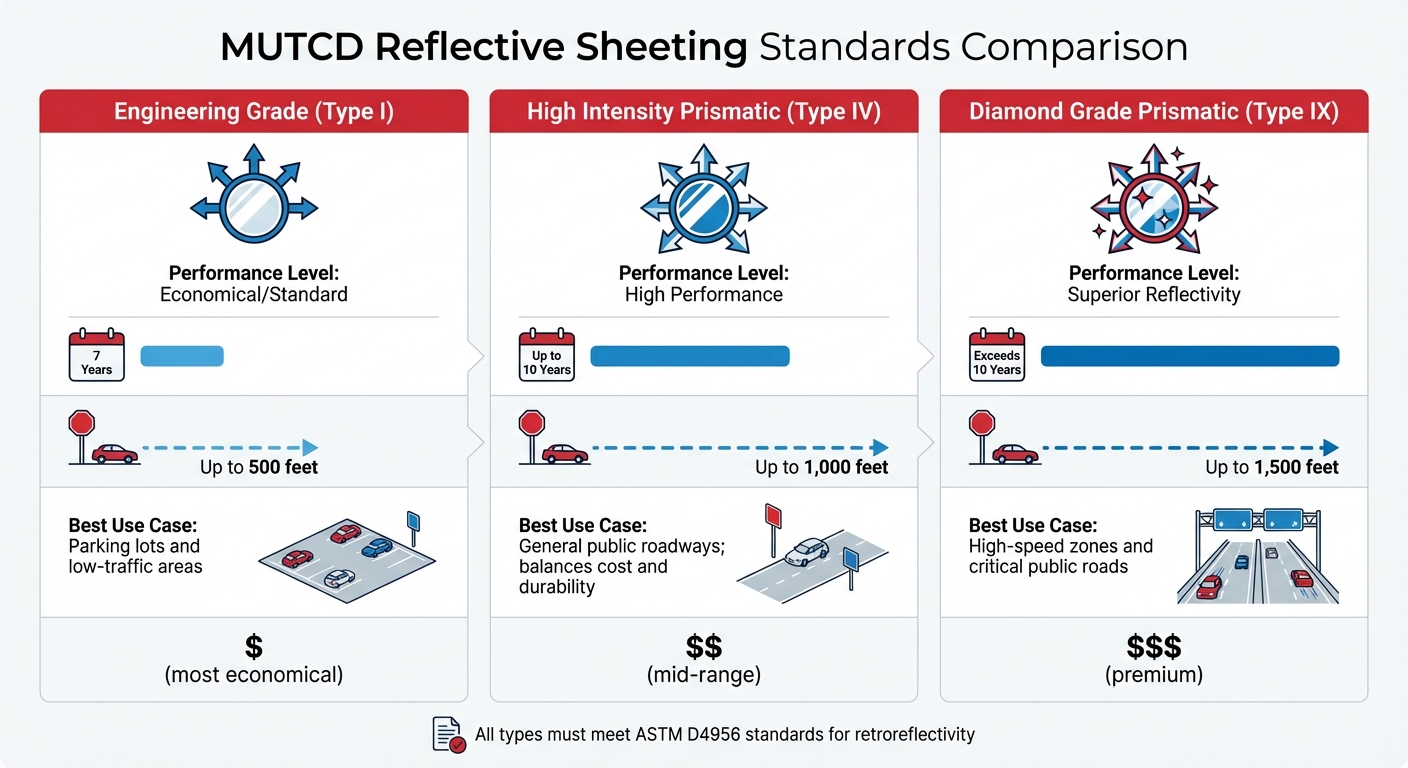
MUTCD Reflective Sheeting Types Comparison for Loading Zone Signs
Sign Codes and Layouts
The R7-6 sign is the standard for marking "No Parking Loading Zone" areas. This sign is versatile, offering several configurations to define zone boundaries effectively. Options include Left Arrow (R7-6L), Right Arrow (R7-6R), Double Arrow, and No Arrow (R7-6NA). These directional indicators make it clear where the loading zone begins and ends.
To add more specificity, supplemental plaques can be used. For instance, the R8-3gP plaque can outline time restrictions, while the R7-201P "Tow-Away Zone" plaque emphasizes enforcement. In areas with high turnover needs, signs might display time limits like "15 Minute Parking" or "10 Minute Parking Drop-Offs and Pick-Ups Only." Another option is the message "Loading and Unloading Only", which is particularly useful for commercial zones.
Now, let’s explore the materials and reflectivity standards that ensure these signs meet MUTCD guidelines.
Material and Reflectivity Standards
To comply with MUTCD standards, loading zone signs must use materials that adhere to ASTM D4956 standards for retroreflectivity. The preferred material is .080-inch thick Alodined Aluminum, known for its rust resistance and durability in outdoor conditions. Reflective sheeting is a critical component, with three types meeting federal requirements:
- Engineering Grade (Type I): Ideal for parking lots and roads with low traffic.
- High Intensity Prismatic (Type IV): Strikes a balance between cost and performance, suitable for general public roadways.
- Diamond Grade Prismatic (Type IX): Offers the highest reflectivity, perfect for critical roadways and high-speed areas.
TrafficSafetyHQ manufactures its signs using .080-inch aluminum paired with 3M™ reflective sheeting, ensuring compliance with federal standards. These signs, printed with UV-resistant inks, are built to last 7 to 10 years, even in areas with intense sunlight.
| Sheeting Type | Performance Level | Best Use Case |
|---|---|---|
| Type I | Economical / Standard | Parking lots and low-traffic areas |
| Type IV | High Performance | General public roadways; balances cost and durability |
| Type IX | Superior Reflectivity | High-speed zones and critical public roads |
With durable materials in place, the next step is ensuring the message on the sign is clear and effective.
Message Clarity and Customization
A well-designed loading zone sign doesn’t just rely on sturdy materials - it also needs a clear, concise message. The standard "No Parking Loading Zone" message uses red text on a white background to indicate parking restrictions, while green text is used for permitted or time-limited parking zones. For maximum visibility, all signs must feature a sealed retroreflective surface, making them easy to read both day and night.
Time-specific messages, like "15 Minute Parking" or "10 Minute Parking Drop-Offs and Pick-Ups Only", are especially helpful in high-turnover areas. For communities with diverse languages, bilingual signs - such as English and Spanish - can improve accessibility and understanding. However, it’s essential to keep the message straightforward. Overloading a sign with too much information can reduce its readability and make enforcement less effective.
Placement and Installation Guidelines
Sign Placement Along Loading Zones
According to the MUTCD, "Regulatory signs shall be installed at or near where the regulations apply". This means signs with directional arrows - like R7-1L, R7-1R, and R7-2 - should clearly mark the boundaries of loading zones. Supplemental plaques, such as the R7-202P, can be used to indicate the applicable side of the zone. These signs help drivers understand exactly where stopping is allowed.
To ensure visibility at all times, all signs must be either retroreflective or illuminated.
Mounting Height and Orientation
For optimal readability, directional arrow signs should be mounted at a 30°–45° angle relative to traffic flow. If signs are installed at a 90° angle to the curb, two signs should be placed back-to-back at the transition point between zones.
Standard loading zone signs in the R7 series are typically 12 x 18 inches for use on conventional roads. TrafficSafetyHQ offers these signs along with mounting hardware options like U-channel post kits, galvanized square sign posts, and portable stands for temporary setups.
Combining proper sign placement with clear curb markings strengthens the clarity of loading zone regulations.
Curb Markings and Zone Coordination
Loading zone signs are most effective when paired with other curbside regulations. For example, they are often used alongside "No Parking Bus Stop" signs (R7-7, R7-107) or "No Standing Any Time" signs (R7-4) to clearly define where one zone ends and another begins. This coordination minimizes confusion for drivers and supports enforcement efforts.
Directional arrows can also be placed near driveways, fire hydrants, or bike lanes to clearly mark boundaries. Signs should be spaced to allow drivers enough time to identify the loading zone and adjust accordingly. Using supplemental plaques alongside these signs further reinforces the rules and encourages compliance.
sbb-itb-5d58da3
Maintenance and Legal Compliance
Inspection and Replacement
Regularly checking loading zone signs for damage, fading, or obstructions is essential to keeping them effective and ensuring driver compliance. If a sign no longer reflects the current conditions, it should be replaced promptly. The New York State Department of Transportation emphasizes this point:
"Signs which do not reflect actual conditions promote driver disobedience of all signs and therefore should be covered, removed or turned away so they are not visible to traffic in any travel lane."
The lifespan of reflective sheeting varies by grade: Engineering Grade (Type I) lasts about 7 years and is visible up to 500 feet, High Intensity Prismatic (Type IV) can last up to 10 years with visibility up to 1,000 feet, and Diamond Grade (Type IX) exceeds 10 years and is visible up to 1,500 feet. Upgrading to higher-grade materials in busy areas can reduce the need for frequent replacements and save on long-term costs. These material choices directly impact how often maintenance is required and help maintain compliance over time.
Coordinating with Local Ordinances
Beyond material standards, local regulations often add another layer of requirements for loading zone signs. These rules might specify restrictions on loading zone durations, the types of vehicles allowed, or specific time limitations. With all states required to adopt the 11th Edition of the MUTCD by January 18, 2026, property managers must routinely review their signage to ensure it aligns with both federal and local guidelines.
Benefits of TrafficSafetyHQ Signs
TrafficSafetyHQ makes maintaining compliant loading zone signage more straightforward with their durable and regulation-friendly designs. Their signs meet USDOT retroreflectivity standards and are available with Engineering Grade, High Intensity Prismatic, or Diamond Grade sheeting. Prices range from $22.43 to $41.57, with tamperproof hardware available starting at $3.87.
Customers consistently rate TrafficSafetyHQ products highly, with an average score of 4.8 out of 5. Verified buyers frequently commend the precise specifications, quality, and timely delivery. Additionally, the company offers a 10-year durability guarantee, helping to lower maintenance expenses while ensuring compliance with both federal and local standards over the long term.
Conclusion
Following MUTCD guidelines for loading zone signs ensures safety, legal compliance, and consistency across different areas. Whether on a busy city street or in a private parking lot, the standardized shapes, colors, and symbols make these signs instantly recognizable. This uniformity minimizes confusion, reduces the risk of accidents, and ensures signs remain visible in all conditions.
In addition to promoting safety, compliant signage shields property owners and municipalities from potential legal issues. As highlighted in the Manual on Uniform Traffic Control Devices:
"The use of non-compliant devices can also create liability in tort lawsuits for private owners and some governments".
By adhering to current standards, property managers and local governments can enhance both legal protection and operational safety.
On top of these safety and legal advantages, compliant signs offer practical benefits. Companies like TrafficSafetyHQ make it straightforward to meet federal requirements, including MUTCD Section 2B.46 and R7-6. Their signs, made from durable .080-inch aluminum and covered with approved reflective sheeting, are designed to last while maintaining visibility.
FAQs
What are the advantages of using MUTCD-compliant loading zone signs on private property?
Using MUTCD-compliant loading zone signs on private property makes your signage both legally enforceable and easy for drivers to recognize. These signs adhere to national standards for design and messaging, ensuring consistency and promoting safety.
Constructed from sturdy .080-inch aluminum and featuring 3M reflective sheeting, these signs are designed to endure outdoor elements while staying highly visible in both daylight and nighttime conditions. By meeting MUTCD standards, they provide long-term reliability and align with federal regulations, offering property owners added confidence and assurance.
What standards does the MUTCD set for the visibility and durability of loading zone signs?
The MUTCD sets standards to ensure loading zone signs are both easy to spot and built to last. These signs are crafted from rust-resistant aluminum and use retroreflective materials, making them clearly visible in both daylight and nighttime conditions. They are also designed to meet strict thickness and construction requirements, ensuring they can endure outdoor elements while staying compliant.
On top of that, the MUTCD provides detailed guidelines for mounting hardware and placement. This ensures the signs are installed correctly and perform reliably over time, improving safety and functionality across various settings.
Why do states need to adopt the latest MUTCD edition by 2026?
States must adopt the latest edition of the MUTCD by 2026 to meet federal regulations aimed at standardizing traffic control measures nationwide. This ensures that road signs, signals, and markings remain consistent, making travel safer and more straightforward for drivers across the country.
The updated MUTCD includes important design updates and safety improvements, helping states minimize potential legal risks while embracing modern traffic management strategies. Keeping up with these changes not only aligns with federal requirements but also enhances the safety and efficiency of transportation systems nationwide.